
Find The Best Commercial Property Loans in Australia
Finding the right commercial property loan for your business involves assessing options from over 80+ lenders for funding up to $5M+. Secure a smarter loan structure tailored to your goals.

Your Commercial Property Loan Application Process

Quick Assessment
Fill out our quick questionnaire so we can understand your unique goals. This is 100% free, secure, and is a soft credit enquiry which does not affect your credit score.

Submit Application
Applying to multiple banks creates numerous hard credit enquiries that can harm your credit score. Instead, our system safely assesses 80+ lenders for you, finding the best deal with the highest chance of first application approval.

Get Approved
Once you are happy with the matched loan, confirm the details by phone. We help finalise the paperwork so you can be approved and have the funds settled shortly after.
WHY COMPARE COMMERCIAL PROPERTY LOANS WITH LEND?
Our smart technology and expert team save you time, protect your credit score, and find you a great deal on business finance.

Trusted by Aussies
With over 50,000 loans funded and an 'Excellent' 4.8/5 rating on Reviews.io, we are one of Australia's most trusted platforms for securing business finance.

Free to use
Our comparison service is 100% free. Our mission is to help Aussie businesses find their lowest interest rates.

Safe & secure
Our process does not affect your credit score at all. It's safe to compare with us.
Why Australian Businesses Trust Us for Commercial Property Loans
Our credibility comes from a proven track record of successful outcomes for thousands of Australian businesses.

"Many clients come to us focused on getting the absolute lowest interest rate. But the long-term success of their property investment often depends more on the loan's structure and flexibility. The wrong terms can restrict cash flow and limit growth, which is a far higher price to pay than a few basis points on the rate."
Andrew Beckett, Head of Broker and Third Party Distribution
Ready To Apply?
Find the right loan to power your business's future. Enter your required amount to see your competitive options now.
Our promise: no credit score impact
Your Guide to Finding the Best Commercial Property Loan
This guide provides a clear pathway to securing the right commercial property loan. We will cover eligibility from a lender's perspective, explain the fundamental finance structures and costs, and provide a straightforward framework for a faster, more certain approval.
Updated: 09/02/2026


Commercial Property Lending by The Numbers
Understanding the landscape is the first step toward securing the capital you need. These figures, drawn from industry data, provide a snapshot of the current commercial lending environment in Australia as of 2025.
- Average Commercial Loan Size: $500,000 to $2 million
- Top 3 Financed Property Types: Industrial Warehouses, Retail Shops, and Office Buildings
- Common Loan Structures: Full Doc (60-70%), Low Doc (20-30%), Lease Doc (10-20%)
Confirm Your Eligibility For Commercial Property Loans

The first question for any borrower is, "Can I actually get this loan?" Below is the specific eligibility checklist that lenders typically use. We provide this to help you prepare a successful application.
- Minimum Trading History: You need an active ABN and have been in business for at least six months. Lenders favour established businesses, with applications from businesses under two years old facing higher scrutiny.
- Minimum Monthly Revenue: Lenders need to see consistent cash flow. Your recent bank statements should show an average monthly revenue of at least $10,000.
- A Clear Credit History: A good credit score (650+) helps you get the best terms, but options are available for lower scores.
- GST Registration: For most commercial loans, your business will need to be registered for GST.
How a Commercial Property Loan Works

A commercial property loan allows a business to purchase or refinance a property intended for business purposes—such as an office, warehouse, or retail shop—without paying the full price upfront. Instead, the lender provides the capital, and the business repays it over an agreed period. This preserves working capital for other critical areas like inventory, wages, and growth initiatives.
Commercial lending is more complex than residential finance because assessors review both the borrower's business health and the property's viability.
- Borrowing Amounts: Property finance generally ranges from $300,000 to over $5 million.
- Loan Terms: Flexible terms are available, commonly from 1 to 30 years, allowing repayment structures to be aligned with your long term business strategy.
- Purchase Options: You have the freedom to buy from a real estate agent, at auction, or via a private sale.
- Repayment Structures: Options often include principal and interest repayments or interest-only periods to suit your cash flow management needs.
- Tax Benefits: The interest on your commercial mortgage is often tax-deductible. It is always recommended to discuss this with your accountant.
Your Questions Answered

LVR, or Loan-to-Value Ratio, is the percentage of the property's value that you're borrowing. Think of it like a house deposit: if a property is valued at $1,000,000 and you provide a $300,000 deposit, you're borrowing $700,000. Your LVR is 70%. It's important because a lower LVR (a bigger deposit) means less risk for the lender, which often leads to a better interest rate and easier approval. For commercial properties, lenders typically prefer lower LVRs compared to residential loans.
This depends on your application strength. For a Full Doc application, an 80% LVR (20% deposit) is often achievable. For Low Doc applications, lenders are typically more conservative, preferring LVRs between 65% and 75% (a 25% to 35% deposit).
A finance specialist can discuss the pros and cons of both fixed vs variable rates. A variable rate offers flexibility and can be lower if market rates fall, while a fixed rate provides certainty for budgeting.
4 Steps To Get The Best Deal On Your Commercial Loan
While a traditional bank application can take weeks, a well-prepared application is the key to securing a formal approval in a fraction of that time. Follow these steps to build a compelling case.

Step 1: Gather Core Information
Begin by clearly defining your funding needs and collecting basic information about your business's ABN, trading history, and revenue. Have a clear idea of the property you wish to purchase and the deposit you have available.

Step 2: Organise Financial Documents
For a Full Doc commercial property purchase, ensure your last two years of tax returns and financial statements are up to date. For other options, have your recent BAS statements or an accountant's letter ready to demonstrate your income.

Step 3: Consult With an Expert
A finance broker can review your situation, advise on the best structure, and identify any potential red flags in your application before it is submitted. This preparation is the single biggest factor in avoiding delays and rejections.

Step 4: Package and Submit
A well-packaged application, complete with all necessary documentation and a clear explanation of your business's strengths, provides the lender with the confidence to grant a fast, successful approval.
Calculators For Your Commercial Loan
Business Loan Calculator
Calculate monthly repayments and total interest for business loans
- Loan amount up to $5M
- Term 1- 30 years
- Variable & fixed rates
Factor to APR Calculator
Convert factor rates to a true APR
- True annual cost
- Fees included
- Compare offers
Choosing The Right Commercial Loan Structure For Your Goal
The ideal commercial property loan is one that matches your documentation level and business goals. A Full Doc loan offers the sharpest rates for established businesses, while Low Doc and Lease Doc options provide crucial access to finance for new businesses or property investors. Understanding the trade-offs is key.
Finance Structure | Pros | Cons |
|---|---|---|
Full Documentation | Secures the most competitive interest rates. Higher borrowing amounts (up to 80% LVR) often available | Requires at least two years of full financial statements and tax returns. |
Low Documentation | Faster approval with less paperwork (e.g., BAS or accountant's letter). Ideal for new or self-employed businesses. | Interest rates are typically higher to reflect the increased risk. LVR is often capped at 65-75%. |
Lease Documentation | Uses the property's rental income to prove serviceability. Great for investment properties with strong tenants. | Only applicable for tenanted properties. May have a lower Loan-to-Value Ratio (around 65-75%). |
Recent Articles
You might also like


Your Commercial Loan Questions, Answered

The single biggest and most common mistake is rushing into applications without a clear business plan and complete financial documentation. A lack of preparation is a primary cause of delays and can lead to an unnecessary rejection.
In 2025's economic climate, lenders are tightening criteria. With modest GDP growth, they are placing a stronger emphasis on an applicant's cash flow projections and lower LVRs to mitigate risk. Your Debt Service Coverage Ratio (your ability to cover debt payments from income) is now more critical than ever, as lenders are prioritising proven serviceability.
A Lease Doc loan uses the rental income from the property's existing lease as the main proof of your ability to repay, without needing full personal or business financials. The lender assesses the application based on the strength of the lease, such as a long-term tenant paying steady rent. It’s a strategic tool for investors because it can speed up approvals for income-producing assets and bypasses complex income verification.
An agent's appraisal is optimistic and geared toward achieving the highest possible sale price. A formal property valuer takes a conservative, risk-focused approach, using comparable sales data and long-term market trends. Their valuation is often lower, and it is the figure the lender will use to calculate your LVR.
Yes, buying a property through a Self-Managed Super Fund (SMSF) is a popular strategy, but it involves very strict rules. It is essential to get specialist financial and legal advice before proceeding.
What Happens After Approval?
Once you receive formal approval, the final stage is settlement. Your finance specialist and solicitor will coordinate with the lender to finalise all legal documentation and transfer the funds to the seller. You will be kept informed at every step. After settlement, you will receive the keys to your new property, and your loan repayments will commence as per your agreement.
Andrew Beckett is the Head of Broker and Third Party Distribution. With over a decade of experience in the finance industry, Andrew specialises in structuring complex commercial and asset finance deals. He is passionate about helping Australian business owners navigate the lending market to find strategic solutions that fuel their growth.
Andrew Beckett, Head of Broker and Third Party Distribution
Phil Druce is the Chief Operations Officer and a co-founder of the business. As a former finance broker, Phil has a deep understanding of the challenges business owners face when seeking finance. He is dedicated to leveraging technology to create a faster, more transparent, and more certain funding experience for all Australians.
Phil Druce, Chief Operations Officer
Stories From Successful Commercial Property Loans

Securing a Retail Space Against Bank Rejection
A Sydney retail business owner was struggling to get approved by traditional banks due to seasonal income fluctuations. We secured a low doc commercial loan at 65% LVR, allowing them to purchase their $1.2 million storefront. Within six months of moving into the larger space, their revenue increased by 40%.
Fast Funding for a Mixed-Use Investment Property
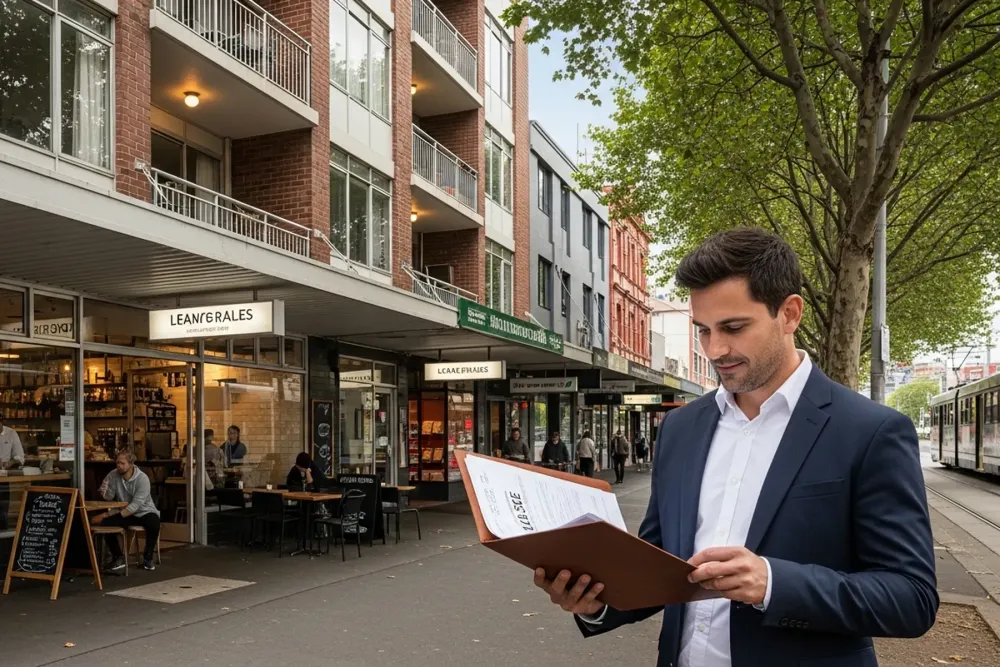
A Melbourne investor faced complex zoning issues on a mixed-use property that delayed traditional financing. We arranged a lease doc loan backed by strong tenant leases, funding $2.5 million at a competitive rate. The deal was finalised in under 30 days, securing an 8% annual yield from day one.

Critical Bridge Finance for a Growing Tech Firm
A rapidly growing Brisbane tech startup needed to secure a new office quickly to accommodate its expansion. We facilitated an $800,000 bridge loan with flexible terms, allowing them to purchase the premises and later refinance to a long-term option. This saved them 15% on initial setup costs and enabled seamless scaling of their operations.
Why Australia Trusts Lend







Ready to Apply?
Get the right loan for your commercial property. Enter your required loan amount below to compare 80+ lenders and get back to running your business, knowing you have found a suitable commercial loan.

This process will not affect your credit rating in any way.